 Book Online
Summer is a time for vacations, pool days, outdoor sports, backyard barbecues, and family gatherings. Unfortunately, it’s also the season when heat-related illnesses become much more common.
As temperatures climb, our bodies work hard to keep us cool. Most of the time, sweating and increased blood flow to the skin help regulate body temperature. However, prolonged exposure to heat, high humidity, strenuous activity, or dehydration can overwhelm the body’s cooling system.
Two of the most serious heat-related illnesses are heat exhaustion and heat stroke. While they may seem similar, they are very different conditions. Heat exhaustion serves as a warning sign that the body is struggling, while heat stroke is a life-threatening medical emergency that requires immediate treatment.
Knowing how to recognize the signs and respond appropriately could save a life.
What Is Heat Exhaustion?
Heat exhaustion occurs when the body loses excessive amounts of water and electrolytes through sweating. It is commonly caused by prolonged exposure to high temperatures, especially when combined with physical activity.
A person experiencing heat exhaustion may appear pale, cool, and clammy. They often sweat heavily and may complain of dizziness, weakness, fatigue, headache, nausea, or muscle cramps. Although they may feel faint, they are usually alert and able to communicate.
The good news is that heat exhaustion can often be reversed if recognized and treated early.
What Is Heat Stroke?
Heat stroke occurs when the body’s temperature rises to dangerous levels and it can no longer cool itself effectively. Unlike heat exhaustion, heat stroke can quickly cause damage to the brain, heart, kidneys, and other vital organs.
One of the most important warning signs of heat stroke is a change in mental status. A person may become confused, disoriented, agitated, or unable to answer simple questions. They may also develop slurred speech, severe headache, vomiting, or lose consciousness.
Heat stroke is a medical emergency. Without rapid treatment, it can be fatal.
The Checklist: Signs and Symptoms
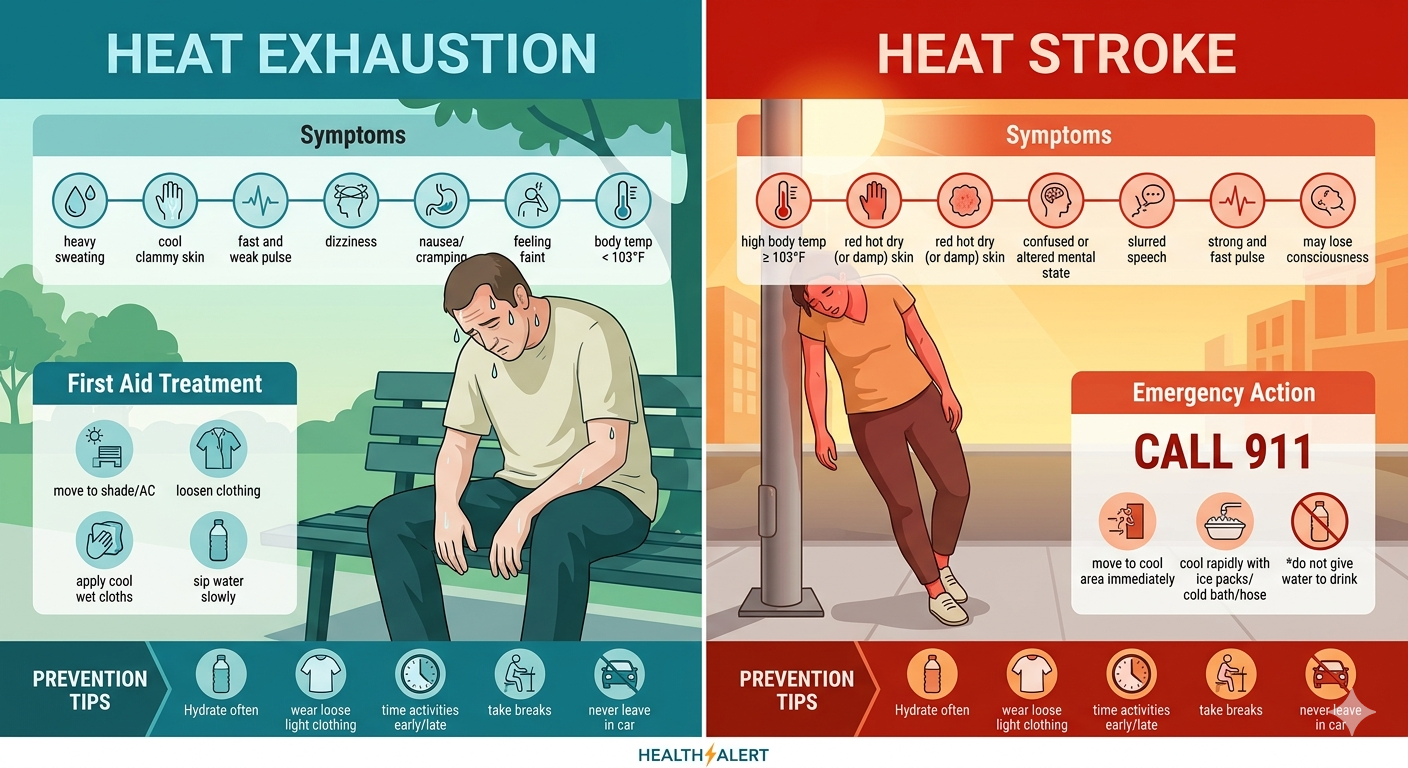
The easiest way to differentiate between heat exhaustion and heat stroke is by looking at the person’s skin, mental status, and whether they are sweating.
| Symptom | Heat Exhaustion | Heat Stroke |
|---|---|---|
| Skin Appearance | Pale, cool, and clammy | Red, hot, and either dry or damp |
| Sweating | Heavy, profuse sweating | May stop sweating entirely or have sticky sweat |
| Mental State | Dizzy, faint, or fatigued, but coherent | Confused, altered mental state, slurred speech |
| Pulse | Fast and weak | Fast and strong |
| Nausea/Vomiting | Mild nausea or stomach cramps | Nausea, vomiting, or severe headache |
| Body Temperature | Normal or slightly elevated | Spikes to 103°F (39.4°C) or higher |
| Consciousness | May feel faint but remains awake | May pass out or lose consciousness |
While no single symptom should be used to make a diagnosis, this chart provides a quick reference for identifying when a heat-related illness may be progressing from heat exhaustion to heat stroke. Any person who develops confusion, altered mental status, loss of consciousness, or a body temperature of 103°F (39.4°C) or higher should be treated as a medical emergency and evaluated immediately.
First Aid for Heat Exhaustion
If you suspect heat exhaustion, take action immediately to help cool the person and prevent the condition from worsening.
Move them to a cool, shaded, or air-conditioned area. Remove excess clothing and encourage them to rest. Apply cool, wet cloths to the skin, particularly around the neck, armpits, and groin, where blood vessels are close to the surface.
If the person is awake and able to swallow, encourage them to sip cool water or a sports drink slowly. Avoid beverages containing alcohol or excessive caffeine.
Most people begin feeling better within a short period once they have cooled down and rehydrated. However, if symptoms worsen or fail to improve, seek medical attention.
First Aid for Heat Stroke
Heat stroke is an emergency that requires immediate medical care.
Call 911 right away. While waiting for emergency responders to arrive, move the person to a cooler environment and begin rapid cooling measures.
Remove excess clothing and use whatever cooling methods are available. This may include placing the person in a cool bath, spraying them with water from a hose, applying wet towels, or placing ice packs on the neck, armpits, and groin.
Do not give the person anything to eat or drink if they are confused, unconscious, or unable to swallow safely.
The goal is to lower the person’s body temperature as quickly as possible until emergency medical personnel arrive.
When Should You Call 911?
When it comes to heat-related illness, it is always better to be cautious.
Call 911 immediately if the person:
- Becomes confused or disoriented
- Has slurred speech
- Loses consciousness
- Experiences seizures
- Has a body temperature of 103°F (39.4°C) or higher
- Is unable to keep fluids down due to vomiting
- Continues to worsen despite cooling efforts
Early recognition and rapid treatment can significantly improve outcomes.
Preventing Heat-Related Illness
The best way to manage a heat emergency is to prevent it from happening in the first place.
Stay Hydrated
Drink water consistently throughout the day, even if you do not feel thirsty. If you are sweating heavily, consider beverages that replace electrolytes.
Dress for the Weather
Wear lightweight, loose-fitting, and light-colored clothing to help your body stay cool.
Schedule Outdoor Activities Wisely
Exercise, yard work, and outdoor projects are safest during the cooler morning or evening hours.
Take Frequent Breaks
If you work or exercise outdoors, rest in the shade or an air-conditioned environment regularly.
Acclimate Gradually
If you are not accustomed to hot weather, slowly increase your time outdoors over several days to allow your body to adjust.
Never Leave Anyone in a Parked Vehicle
Temperatures inside a vehicle can rise rapidly, even on relatively mild days. Children, older adults, and pets are especially vulnerable.
Final Thoughts
Heat exhaustion and heat stroke are both serious conditions, but knowing the difference can help you respond appropriately and potentially save a life.
Heat exhaustion is a warning sign that the body needs help cooling down. Heat stroke is a life-threatening emergency that requires immediate medical attention.
As temperatures rise this summer, take a few moments to familiarize yourself with the signs and symptoms of heat-related illness. Being prepared and acting quickly could make all the difference when every second counts.
At RESQ & Arise Safety and CPR Training, we believe that education and preparedness save lives. Our First Aid, CPR, and AED training programs help individuals, workplaces, schools, and healthcare providers develop the confidence and skills needed to respond during emergencies.
Trained and Prepared… When Seconds Count!