 Book Online
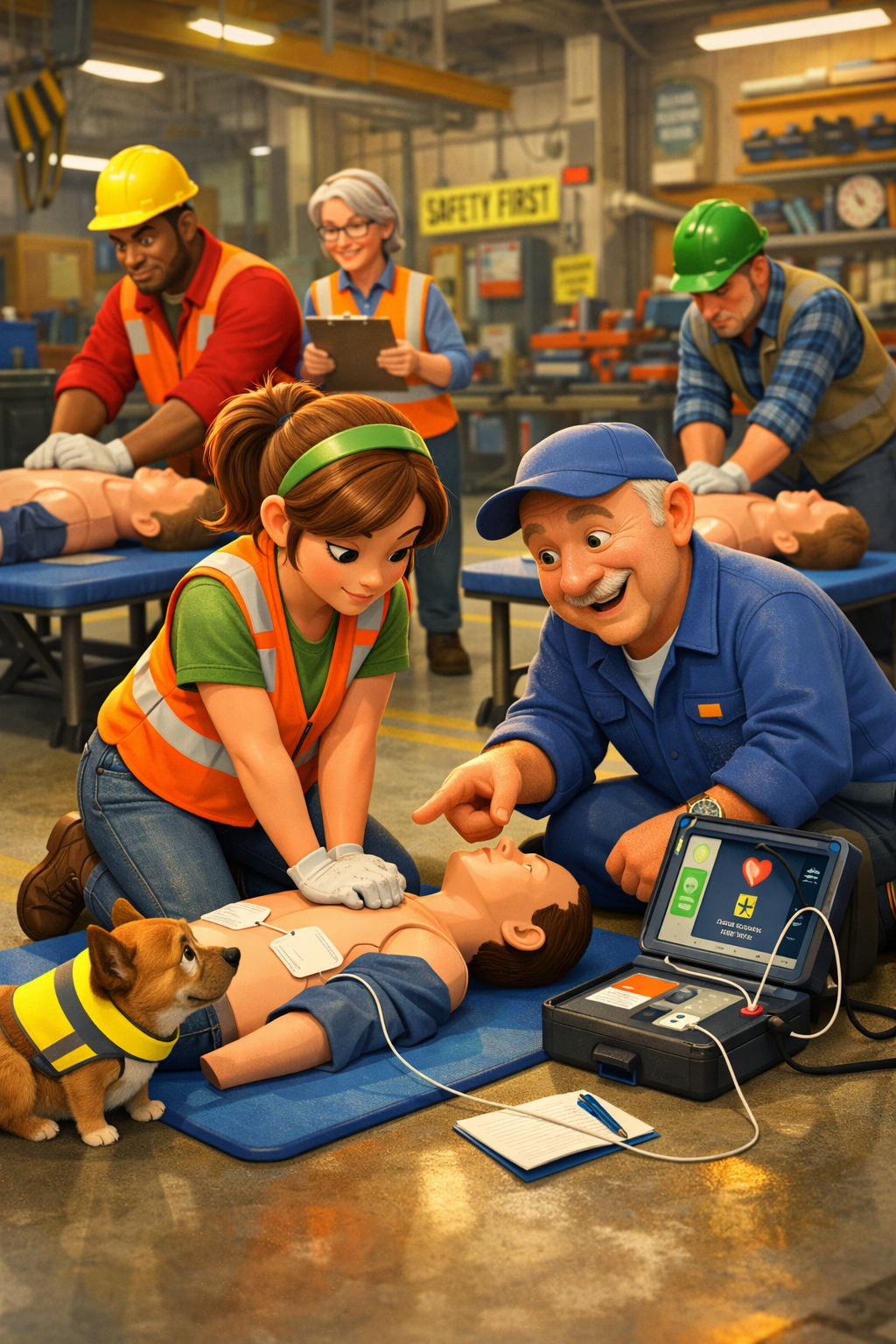
At first, CPR was a skill reserved almost exclusively for medical professionals. Doctors, nurses, and trained hospital staff were the only ones taught how to respond to cardiac arrest. In the early 1960s, this made sense, CPR was new, and the medical community was still refining the technique.
However, a critical problem quickly became clear: most cardiac arrests weren’t happening in hospitals. They were happening at home, at work, and in public spaces, far from immediate medical care. By the time emergency responders arrived, it was often too late. Leaders in emergency medicine and organizations like the American Heart Association recognized a simple but powerful truth: survival depended on what happened in the first few minutes and that meant ordinary people needed to act.
The 1970s Shift: Training the Public & The Role of OSHA
In the 1970s, a major shift began. The American Heart Association launched large-scale efforts to teach CPR to the general public. Their goal was ambitious: turn bystanders into immediate responders.
Standardizing this shift was the arrival of the Occupational Safety and Health Administration (OSHA), which was established in 1970 and officially opened in 1971. OSHA’s mission was to ensure safe and healthful workplaces, and they quickly recognized that “safety” included emergency readiness. They began requiring that if a workplace is not in “near proximity” to a medical facility, a person must be trained to render first aid—a mandate that today strongly includes CPR and AED usage.
During this same period, training tools evolved. One of the most important innovations was the introduction of the Resusci Anne manikin. This lifelike model allowed students to physically practice chest compressions and rescue breaths in a safe, controlled environment—transforming CPR from a theoretical concept into a hands-on skill.
CPR Enters Everyday Life
As training became more accessible and OSHA regulations moved through industries, CPR quickly spread beyond hospitals and into communities. Schools began incorporating CPR education into their programs. Workplaces started requiring employee certification for safety compliance to meet “near proximity” response time guidelines (usually interpreted as a 3-4 minute window).
For the first time in history, a regular person, without any medical background, could step in and save a life. This shift fundamentally changed the chain of survival. A neighbor, coworker, teacher, or even a stranger could now recognize cardiac arrest, begin CPR immediately, and keep blood flowing to the brain until help arrived.
A Legacy That Continues Today
What started in the 1970s has grown into a global movement. Today, millions of people are trained in CPR, and public access defibrillators (AEDs) are placed in schools, airports, gyms, and workplaces. But the mission remains the same: empower everyday people to act when seconds count. Because in a cardiac emergency, the difference between life and death often isn’t a doctor—it’s the person standing nearby who is willing and prepared to help.
Don’t Just Be a Bystander—Be a Lifesaver
You don’t need a medical degree to save a life. You just need the training—and the confidence to act. Join the millions of everyday heroes who are prepared to step in during an emergency. Sign up for a public CPR class today at ResqTraining.com and be ready when it matters most.
Sources for Part 4:
- American Heart Association — The 1970s and the Expansion of Lay-Rescuer CPR.
- Occupational Safety and Health Administration (OSHA). Standard 1910.151 – Medical Services and First Aid.
- Eisenberg, M. S. (2013). Life in the Balance: A History of Combatting Sudden Cardiac Death.
- Journal of the American College of Cardiology — The Evolution of Bystander CPR.