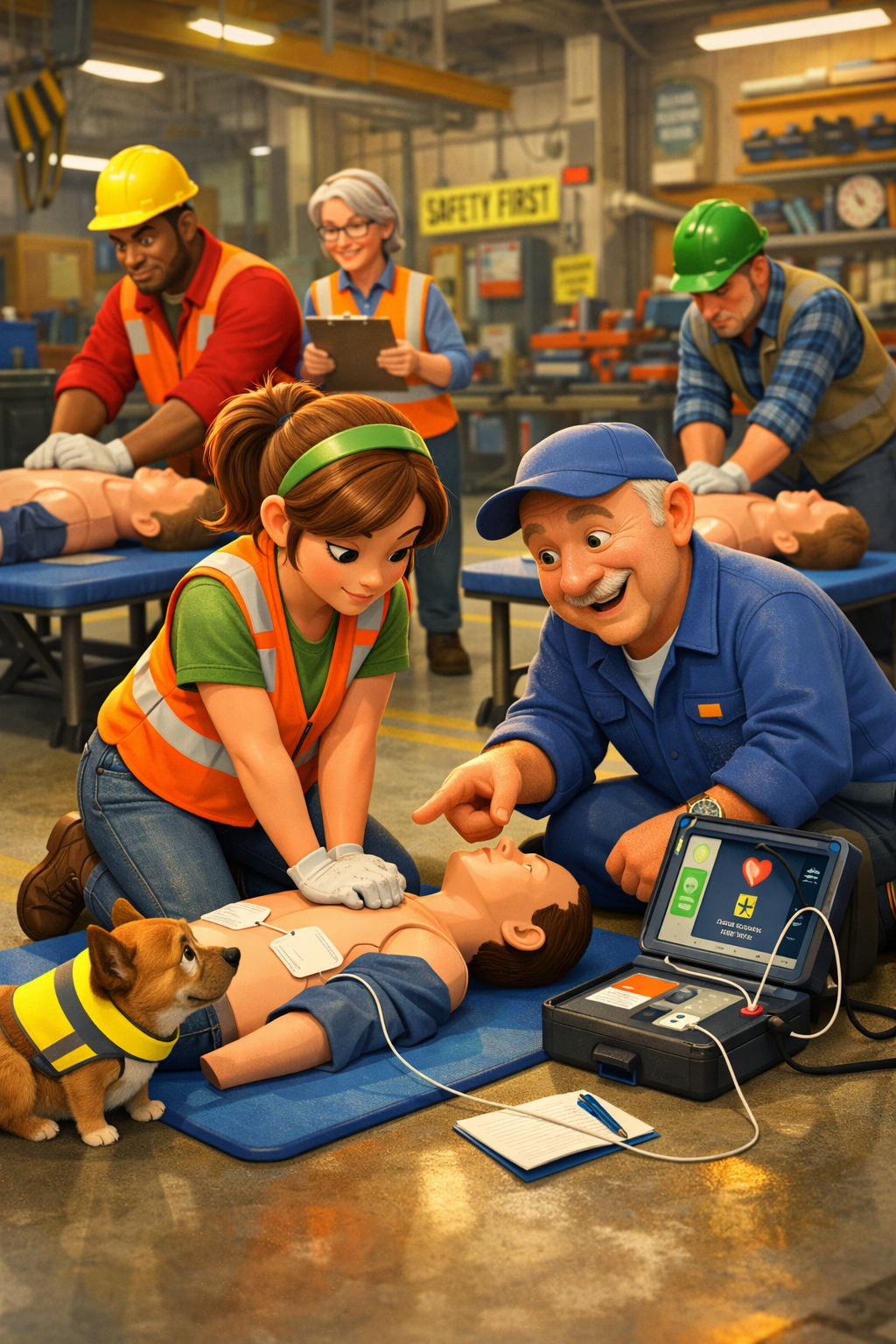
Part 4: CPR Goes Public — The Rise of the Everyday Rescuer

At first, CPR was a skill reserved almost exclusively for medical professionals. Doctors, nurses, and trained hospital staff were the only ones taught how to respond to cardiac arrest. In the early 1960s, this made sense, CPR was new, and the medical community was still refining the technique.

However, a critical problem quickly became clear: most cardiac arrests weren’t happening in hospitals. They were happening at home, at work, and in public spaces, far from immediate medical care. By the time emergency responders arrived, it was often too late. Leaders in emergency medicine and organizations like the American Heart Association recognized a simple but powerful truth: survival depended on what happened in the first few minutes and that meant ordinary people needed to act.

The 1970s Shift: Training the Public & The Role of OSHA

In the 1970s, a major shift began. The American Heart Association launched large-scale efforts to teach CPR to the general public. Their goal was ambitious: turn bystanders into immediate responders.

Standardizing this shift was the arrival of the Occupational Safety and Health Administration (OSHA), which was established in 1970 and officially opened in 1971. OSHA’s mission was to ensure safe and healthful workplaces, and they quickly recognized that “safety” included emergency readiness. They began requiring that if a workplace is not in “near proximity” to a medical facility, a person must be trained to render first aid—a mandate that today strongly includes CPR and AED usage.

During this same period, training tools evolved. One of the most important innovations was the introduction of the Resusci Anne manikin. This lifelike model allowed students to physically practice chest compressions and rescue breaths in a safe, controlled environment—transforming CPR from a theoretical concept into a hands-on skill.

CPR Enters Everyday Life

As training became more accessible and OSHA regulations moved through industries, CPR quickly spread beyond hospitals and into communities. Schools began incorporating CPR education into their programs. Workplaces started requiring employee certification for safety compliance to meet “near proximity” response time guidelines (usually interpreted as a 3-4 minute window).

For the first time in history, a regular person, without any medical background, could step in and save a life. This shift fundamentally changed the chain of survival. A neighbor, coworker, teacher, or even a stranger could now recognize cardiac arrest, begin CPR immediately, and keep blood flowing to the brain until help arrived.

A Legacy That Continues Today

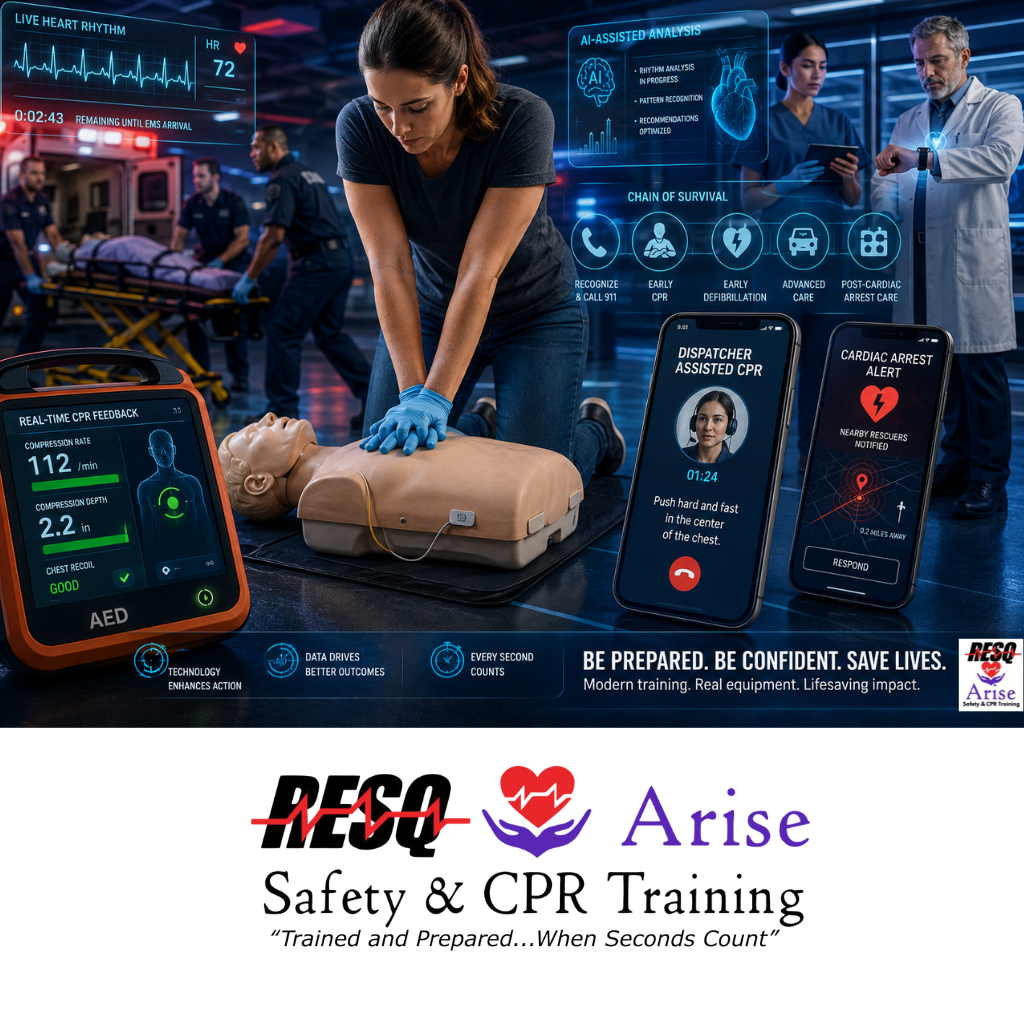
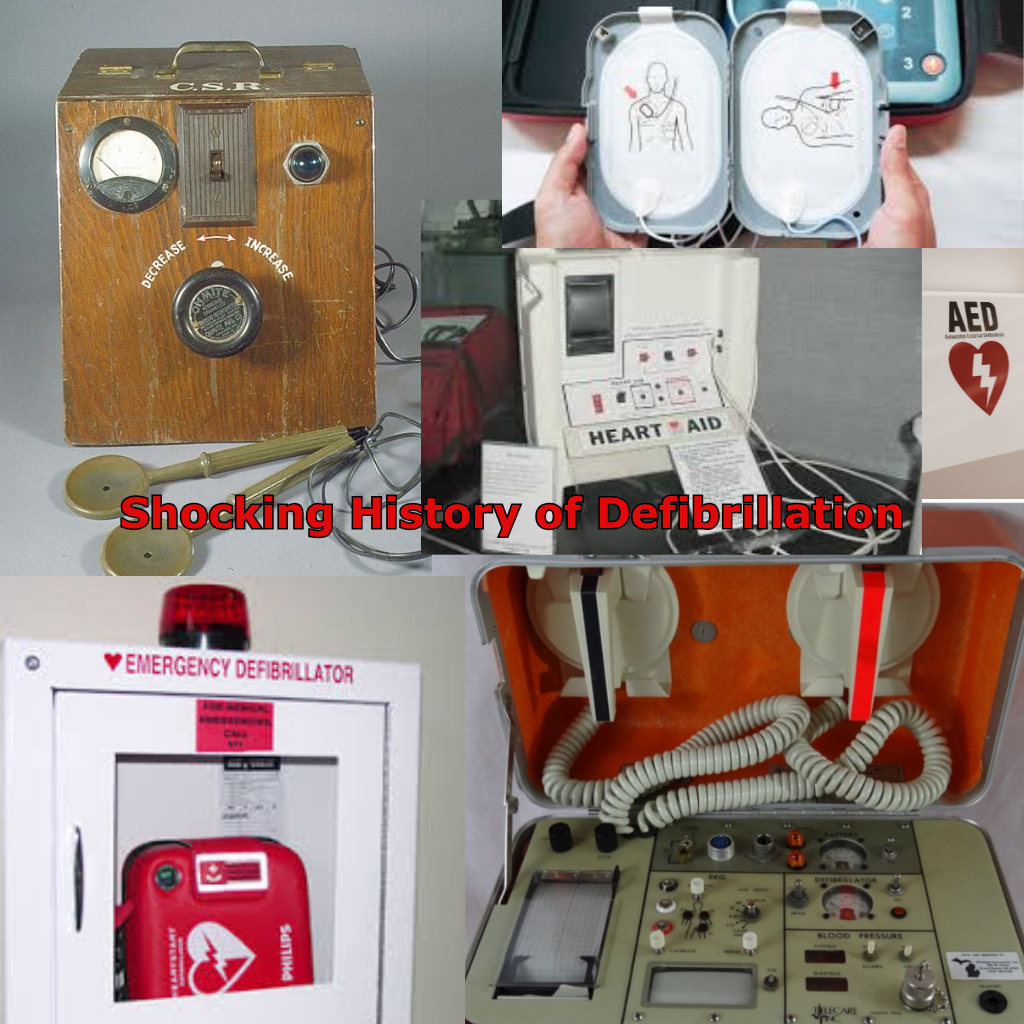
What started in the 1970s has grown into a global movement. Today, millions of people are trained in CPR, and public access defibrillators (AEDs) are placed in schools, airports, gyms, and workplaces. But the mission remains the same: empower everyday people to act when seconds count. Because in a cardiac emergency, the difference between life and death often isn’t a doctor—it’s the person standing nearby who is willing and prepared to help.

Don’t Just Be a Bystander—Be a Lifesaver

You don’t need a medical degree to save a life. You just need the training—and the confidence to act. Join the millions of everyday heroes who are prepared to step in during an emergency. Sign up for a public CPR class today at ResqTraining.com and be ready when it matters most.

Sources for Part 4:

  • American Heart Association — The 1970s and the Expansion of Lay-Rescuer CPR.
  • Occupational Safety and Health Administration (OSHA). Standard 1910.151 – Medical Services and First Aid.
  • Eisenberg, M. S. (2013). Life in the Balance: A History of Combatting Sudden Cardiac Death.
  • Journal of the American College of Cardiology — The Evolution of Bystander CPR.

Part 3: Adding the Chest Compressions

Rescue breathing was a major breakthrough—but it only solved half the problem of cardiac arrest survival. Oxygen could enter the lungs, but without blood circulation, it never reached the brain or vital organs. Within minutes of a heart stopping, the lack of blood flow leads to irreversible brain damage. The missing link wasn’t just air—it was movement.

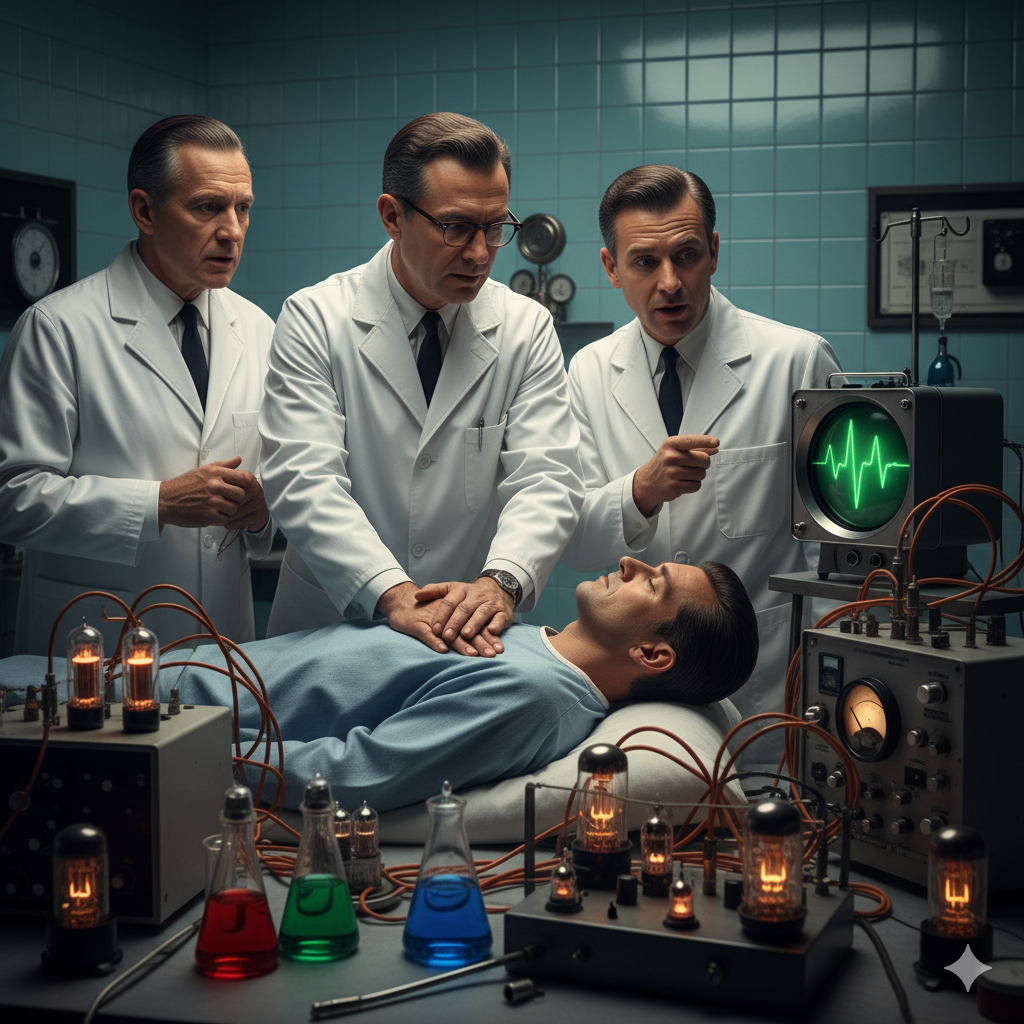
That changed in 1960 at Johns Hopkins University, when researchers William B. Kouwenhoven, James R. Jude, and Guy Knickerbocker made a discovery that would redefine emergency medicine and the history of cardiopulmonary resuscitation (CPR).

The Breakthrough: Pumping the Heart Without Surgery

While studying external electrical defibrillation—searching for a way to treat chaotic heart rhythms without invasive surgery—the team noticed something unexpected: Firm pressure applied to the chest could generate a measurable pulse. They realized that the heart could be compressed between two rigid structures:

  1. The sternum (breastbone) in the front
  2. The spine in the back

By pressing rhythmically on the sternum, blood was forced out of the heart to the brain and body. Releasing pressure allowed the heart to refill. This technique, known as “closed-chest cardiac massage,” allowed rescuers to circulate blood without opening the chest cavity. This was a massive leap from earlier invasive medical methods such as:

  • Open-Chest Cardiac Massage: A surgical procedure requiring a doctor to cut open the chest to manually squeeze the heart.
  • Internal Defibrillation: Applying shocks directly to the heart muscle during an operation.
Why Circulation Changed Cardiac Arrest Outcomes

Before this discovery, resuscitation focused almost entirely on ventilation (breathing), and survival rates remained extremely low. Afterward, rescuers could artificially create a heartbeat. This wasn’t just an improvement—it was the foundation of modern life support. Oxygen from rescue breaths could finally reach the brain, preventing cell death.

The Integration of Modern CPR Standards

When chest compressions were combined with rescue breathing, the integration formed what we now know as Cardiopulmonary Resuscitation (CPR). This coordinated system addresses both the lungs (Ventilation) and the heart (Circulation). Organizations like the American Heart Association (AHA) quickly recognized its impact and began standardizing CPR training, laying the foundation for modern emergency response protocols used worldwide today.

The Clinical Reality of High-Quality CPR

Effective chest compressions are the core of cardiac arrest intervention, but they must meet specific clinical standards to be effective:

  • Compression Depth: At least 2 inches in adults to adequately squeeze the heart.
  • Compression Rate: 100–120 beats per minute to maintain blood pressure.
  • Minimal Interruptions: To ensure constant blood flow to the brain.

In a medical emergency, circulation is the top priority, as brain damage begins in as little as 4–6 minutes. This discovery shifted the focus of first aid from a passive concept to an active, life-saving mechanical intervention.

Master the “Missing Piece” of Survival

High-quality chest compressions are the most critical factor in surviving a cardiac arrest. Build your confidence and learn proper hand placement with expert, hands-on CPR certification at ResqTraining.com.

Sources for Part 3:

  • Kouwenhoven, W. B., Jude, J. R., & Knickerbocker, G. G. (1960). Closed-chest cardiac massage. JAMA.
  • Johns Hopkins Medicine. The History of CPR: The Hopkins Connection.
  • American Heart Association. 1960: The birth of modern CPR.

Part 2: The Invention of Mouth-to-Mouth

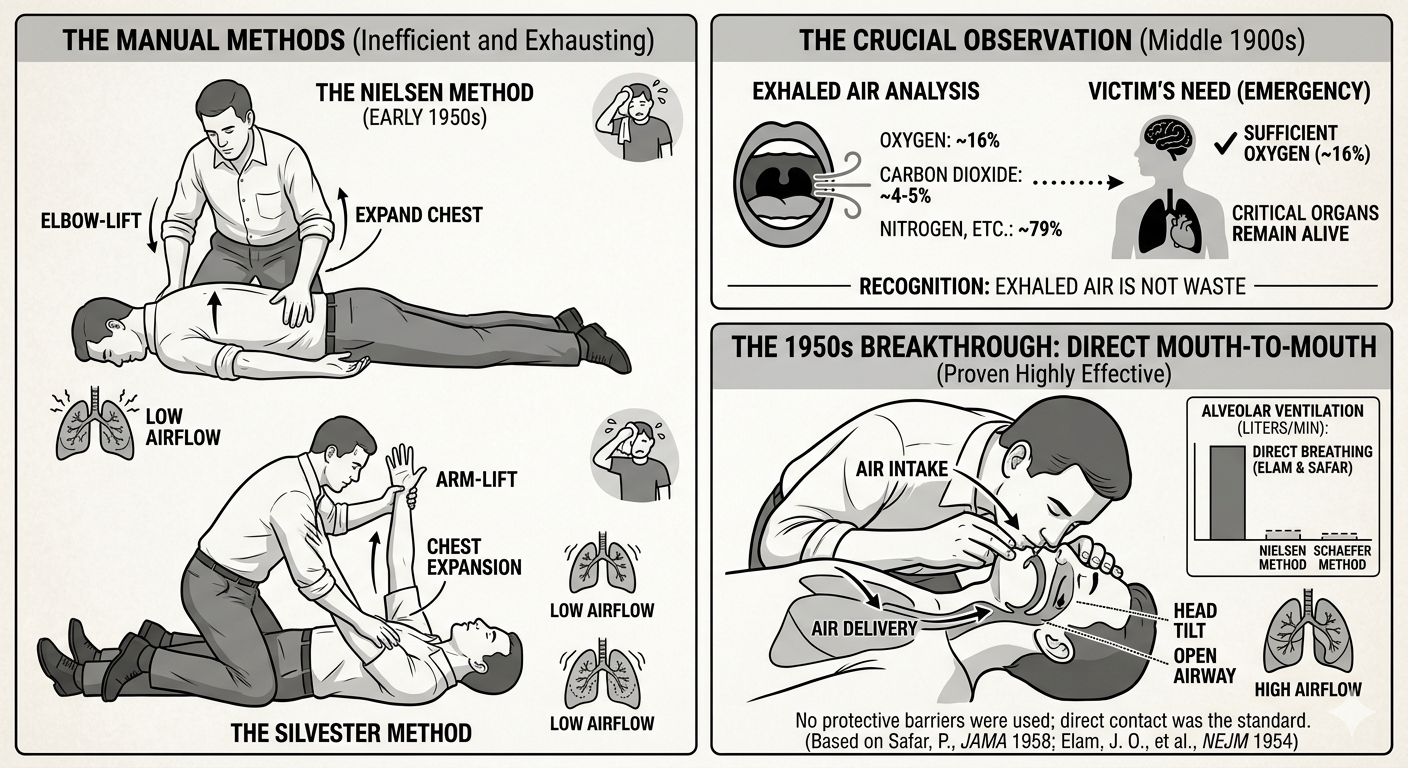
In the middle of the 1900s, scientists made a big discovery. They found that human breath still has enough oxygen to help someone else. Before this, many people believed that the air we breathed out was just waste. However, researchers discovered that while we breathe in about 21% oxygen, we only use a small amount of it. This means the air we breathe out still contains around 16% oxygen. This is more than enough to keep another person’s brain and organs alive during an emergency.

Before mouth-to-mouth became the standard, rescuers used several manual techniques that relied on body movement:

  • The Silvester Method: This involved laying the victim on their back and raising their arms above their head to expand the chest, then pressing the arms against the chest to force air out.
  • The Schaefer Method: To avoid the tongue blocking the airway, the victim was placed face-down. The rescuer would kneel over them and press on the lower back to push air out, then release to let air in.
  • The Holger Nielsen Method: Popular in the early 1950s, this combined the two. The victim was face-down, and the rescuer would pull the victim’s elbows upward to expand the chest, then press on the back to exhale.

While these were popular, they were very exhausting and moved very little air compared to direct breathing.

During the 1950s, Dr. James Elam and Dr. Peter Safar proved that direct mouth-to-mouth breathing was much more effective. They conducted experiments showing that a rescuer could maintain healthy oxygen levels in a victim just by using their own breath. Interestingly, they initially experimented with “mouth-to-nose” breathing as well, believing it might be easier to create a seal. However, they eventually settled on mouth-to-mouth as the primary method because it allowed for a larger volume of air to enter the lungs.

One major difference between then and now was the lack of protection for the rescuer. In the 1950s, there were no breathing barriers or pocket masks. Rescuers were taught to place their mouths directly onto the victim’s face. At that time, doctors were so focused on the survival of the patient that the risk of spreading germs to the rescuer was rarely discussed. It wasn’t until decades later, with a better understanding of infectious diseases, that the medical community developed the one-way valves and barriers we use today.

While these tests often focused on victims of drowning or drug overdoses, doctors realized this method could help in any situation where someone stopped breathing. Because of their hard work, this became a standard way to help victims of drowning, suffocation, and even carbon monoxide poisoning.

Consequently, doctors started to teach this method to others. It was a simple way to help, but the heart still needed more attention. Medical professionals began to notice that even if they could get air into the lungs, the victim’s skin would remain blue and their pulse would remain absent. They realized that oxygen in the lungs was useless if there was no way to transport it to the brain and other vital organs. This critical gap in knowledge meant that while rescue breathing was a massive leap forward, the “engine” of the body—the heart—was still being ignored.

Are you confident in your rescue breathing?

Learn the safest and most effective mouth-to-mouth techniques with professional guidance. Register for training at ResqTraining.com.

Sources for Part 2:

  • Safar, P. (1958). Ventilatory efficacy of mouth-to-mouth artificial respiration. JAMA.
  • Elam, J. O., et al. (1954). Oxygen and carbon dioxide exchange and alveolar ventilation in mouth-to-mask resuscitation. New England Journal of Medicine.
  • National Center for Biotechnology Information (NCBI). The history of the Holger Nielsen method.

Part 1: The Early Days of Saving Lives

In the old days, people did not understand how the heart functioned. Even without this knowledge, people tried to save those whose breathing had stopped. Although they lacked scientific understanding, they still believed that life could be restored in some cases. Because of this belief, people used their available tools and ideas to save lives.

The first techniques used to save people whose breathing had stopped were very unusual. For example, some used the “Heat Method,” which involved applying hot coals or warm ashes directly to a victim’s skin to shock the body back to life. Others tried the “Fumigation Method,” where they blew tobacco smoke into the victim’s body because they believed the warmth and nicotine would stimulate the heart. They truly believed that people could be brought back to life using these techniques. Apart from that, different groups tried various ways to restore breathing, such as rolling victims over large barrels or even hanging them upside down.

Unfortunately, these methods often caused more harm than good. The “Heat Method” frequently resulted in severe burns, while the “Fumigation Method” could cause internal damage. Over time, rescuers noticed that victims rarely woke up after these treatments. In many cases, the methods actually made the victim’s condition worse. People eventually realized these ideas did not work because the results were not consistent, and the injuries to the survivors were too great to ignore.

However, in the Middle Ages, people used even stranger techniques to save people whose breathing had stopped. For instance, people used a technique called flagellation, which meant hitting people whose breathing had stopped using whips. Another common practice was the “Inversion Method,” where victims were hung by their feet. People believed that gravity would help drain fluids and “shake” the life back into the body.

Similar to the earlier methods, these techniques were often painful and dangerous. Flagellation caused external injuries, and hanging people upside down could lead to further respiratory failure. Rescuers eventually noticed that these methods did not increase survival rates. Instead of helping, these actions often caused unnecessary suffering for the victims. Through observation, early medical thinkers realized that “waking up” the body through pain or gravity was not the answer to restoring breath.

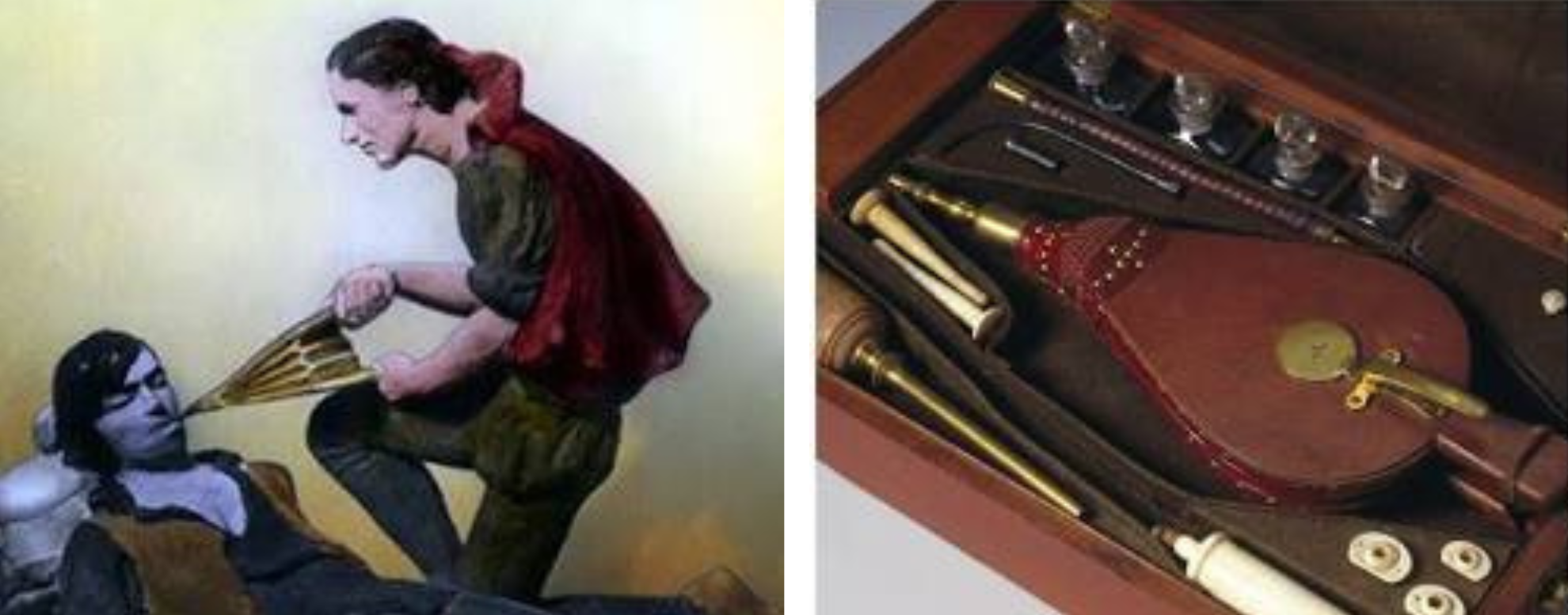
After that, new ideas began to emerge. In the 1700s, doctors began experimenting with air and breathing. For instance, doctors began using a device called a bellows. Normally, a bellows is used to blow air into a fireplace. However, doctors began using a bellows to blow air into a person’s lungs. At that time, this was a very promising idea.

In addition to bellows, doctors tried using long wooden tubes or silver pipes. They would insert these into the victim’s throat to create a direct path for air. Some societies even created a “Drowning Screen,” which was a large board used to push and pull on the victim’s chest while air was being forced in. These tools were used to manually inflate and deflate the lungs like a balloon.

Today we know that using bellows was often dangerous because the pressure could be too high for human lungs. However, this period was important for one reason. Scientists began to realize that lungs required a specific volume of air and that “stale” air was different from “fresh” air. This led to the discovery of oxygen and the understanding that breathing for someone else could keep their brain and heart alive. Driven by these early concepts, doctors began to move away from painful “shocks” and toward the scientific study of the respiratory system.

This era was the true beginning of rescue breathing. While it was only one half of the puzzle, it was a vital discovery. These early attempts at artificial ventilation paved the way for the development of full CPR, which would eventually save millions of lives.

Sources:

  • The American Heart Association: History of CPR
  • Museum of Bernoulli: Early Respiratory Devices
  • Journal of Emergency Medicine: Evolution of Resuscitation

RESQ Arise | CPR, First Aid & BLS Training in Central Indiana

Beyond Compliance: Why CPR Training is a Culture Game-Changer

When we think of workplace safety, we often think of yellow wet-floor signs, fire extinguishers, or ergonomic chairs. But the most critical safety tool your company can possess isn’t a piece of equipment—it’s the person sitting at the next desk.

Sudden cardiac arrest can happen to anyone, anywhere. When it happens at work, the minutes spent waiting for an ambulance are the most critical. By implementing a CPR and First Aid training program, you aren’t just checking a compliance box; you are building a team that literally has each other’s backs.

Understanding the OSHA Requirements

Many business owners ask, “Is this required by law?” The answer depends on your industry and your proximity to medical care.

Under OSHA Standard 29 CFR 1910.151(b), if your workplace is not in “near proximity” to a hospital, clinic, or infirmary, you are required to have at least one person adequately trained to render first aid. OSHA generally interprets “near proximity” as a 3–4 minute response time. In high-risk environments like construction or logging, CPR training is specifically mandated.

Even if you are located in a city center near a hospital, OSHA’s Guidelines for First Aid Training Programs strongly recommend CPR as a core element of any safety plan. Relying solely on 911 is a gamble; for every minute that passes without CPR, the chance of survival drops by nearly 10%.

The “Ultimate” Team Building Activity

Most team-building exercises involve escape rooms or trust falls. CPR training is the ultimate “trust fall” with real-world stakes.

  1. Dissolving Hierarchies: In a CPR class, the CEO and the intern are equals. They are both students learning to save a life. This levels the playing field and fosters a unique kind of mutual respect.
  2. Coordinated Pressure: Training involves mock scenarios where employees must communicate clearly, assign roles (calling 911, fetching the AED, performing compressions), and rotate to prevent fatigue. These are the same “soft skills” required for high-stakes project management.
  3. Shared Vulnerability: Learning a life-saving skill is an emotional experience. Sharing that journey creates a “supportive community” feel that no happy hour can replicate.

Building Company Trust and Morale

Employees today want to work for companies that value them as human beings, not just as “human resources.”

  • Trust in Leadership: When a company invests time and money into CPR training, it sends a loud message: Your life matters to us. This builds deep-seated loyalty and trust in management.
  • Empowerment: Training removes the “bystander effect.” Employees feel confident and empowered rather than helpless. This confidence often spills over into their daily work, reducing anxiety and increasing general morale.
  • A Culture of Care: A safety-conscious workplace is a lower-stress workplace. Knowing that your colleagues are capable of helping you in a crisis creates a psychological “safety net.”

Real Stories: Heroes in the Hallways

The impact of this training isn’t theoretical. Here are a few true stories of co-workers who became lifesavers:

The Lowe’s Hero

Recently, in Orchard Park, a Lowe’s employee named Jerry jumped into action when his co-worker, Jim, collapsed in cardiac arrest. Despite not being a medical professional, Jerry’s basic CPR knowledge kept Jim stable until EMTs arrived. Doctors later confirmed that without Jerry’s immediate response, Jim would not have survived the trip to the hospital.

The Parks Department Save

In Fremont, two Parks Department employees, Ronald and Jonathan, were backing up a trailer when Ronald suddenly went into cardiac arrest. Jonathan had received CPR training from the city just two months prior. He performed compressions for the first time in his life, saving his friend and colleague. Ronald later told news outlets, “If it wasn’t for this guy… I wouldn’t be here.”

A Second Chance in the Office

Heather Baker, an educator in Illinois, collapsed in front of her colleagues. Her fellow teachers didn’t hesitate; they began CPR and used an AED immediately. Today, Heather is a school principal, dedicating her “second chance” to teaching others the very skills that saved her life. She describes her co-workers not just as colleagues, but as “everyday heroes.”

Conclusion

Investing in CPR training is one of the few business decisions that offers a 100% return on humanity. It fulfills legal recommendations, sharpens team coordination, and—most importantly—proves to your employees that their safety is your priority.

Is your team ready to save a life? Contact us today to schedule a workplace certification course.

Master Life-Saving Skills on Your Schedule

Do you need a CPR certification? Are you worried about sitting in a classroom all day? You are not alone. Many people have busy schedules. Luckily, RESQ & Arise offers a modern solution. It is called Blended Learning. This includes HeartCode® for healthcare professionals and Heartsaver® for the general public.

How the Process Works

The process is simple and broken into three easy steps.

  1. Purchase Your Course: First, you buy the online portion that you need.

  2. Complete the Online Portion: This part covers the science and theory. You will watch videos and do interactive simulations. Because it is online, you can pause whenever you want. You can even rewind if you miss something.

  3. Complete Your Skills Session: This is the final step. You will meet with a friendly instructor at our Indianapolis training center. You will practice your hands-on skills with a manikin. Once you pass, you get your certification!

Same Certification, Better Flexibility

Some people ask if this “counts” as a real certification. The answer is a loud yes.

  • Same Science: Both formats use the exact same AHA guidelines.

  • Same Card: Your eCard will look exactly the same as a classroom card.

  • Same Recognition: Employers and hospitals accept it just like a traditional class.

In fact, blended learning is often better. The online part is adaptive. It focuses on what you don’t know yet. Therefore, you won’t waste time on things you already know.

The Big Benefits

Why choose blended learning at RESQ & Arise? There are many reasons why this is the top choice for our students.

  • Convenience: You can study at 2:00 AM or on your lunch break.

  • Speed: The in-person skills part is much shorter than a full 8-hour class.

  • Personalized: You can spend more time on tricky topics.

  • Fast Results: We offer same-day certifications in most cases!

Ready to Start?

Blended learning gives you the best of both worlds. You get the comfort of home and the confidence of hands-on practice. It is efficient, effective, and recognized everywhere.

Select your course below to get started today:

At RESQ & Arise, we make sure you leave trained, prepared, and confident!

CPR Training Requirements for Indiana Home Health Caregivers

In Indiana, documentation of caregiver training is not optional — it is a compliance requirement under both state law and federal Conditions of Participation. Agencies must not only train caregivers in CPR, AED, and First Aid, but also retain documentation that demonstrates the training meets regulatory expectations.

Indiana Administrative Code Requirements

State regulations require that all personnel records for employees delivering home health services include documentation of current qualifications and certifications. Specifically:

  • Under 410 IAC 17-12-1, agencies must maintain personnel records that include copies of current licenses, certifications, or registrations required to perform the service (such as CPR/AED/First Aid) and keep them current and accessible. Legal Information Institute

  • Further, 410 IAC 17-14-1 sets a framework for training requirements and continuing education programs for home health aides, and puts the onus on agencies to maintain sufficient documentation demonstrating caregiver competency and training completion prior to patient contact. Legal Information Institute

Though Indiana’s administrative code does not list CPR/AED specifically in every section of the home health aide competency requirements, the regulatory language on personnel qualifications and documentation applies broadly to all required competencies, including emergency response capabilities.

Federal Requirements Under 42 CFR

At the federal level, agency compliance obligations are set out in 42 CFR Part 484, the Conditions of Participation (CoPs) for Home Health Agencies. While 42 CFR does not explicitly list CPR/AED as individual training topics, it requires that agencies:

  • Train home health aides and demonstrate competence in tasks before allowing them to perform those tasks independently. Aides must not be considered competent in any task for which they have been rated “unsatisfactory” until they have received training and passed evaluation. Agencies must maintain documentation showing these standards have been met. ecfr.gov+1

  • Provide annual in-service training of at least 12 hours per 12-month period for home health aides, with documentation of completion maintained by the agency. ecfr.gov

These federal requirements make it clear that documented competency evaluation and training records are expected for all care tasks — especially emergency preparedness tasks such as CPR, AED use, and First Aid.

Why This Matters for CPR/AED/First Aid

Regulators and surveyors interpret these standards to mean that a home health agency must be able to produce records showing:

  • Caregivers hold current CPR/AED/First Aid cards from a recognized training provider (such as the American Heart Association).

  • Training includes hands-on skills verification, not just online completion.

  • Annual in-service or refresher training is documented in personnel files.

  • Agencies track expiration dates and recertification statuses.

If an agency cannot produce these records during a licensure survey or audit, it can lead to survey deficiencies or corrective action requirements.


How RESQ & Arise Ensures You Meet These Exact Requirements

At RESQ & Arise Safety and CPR Training, we support Indiana home health agencies with training programs designed explicitly to satisfy both state personnel documentation expectations and federal competency standards:

Our training programs are tailored for agencies that need to demonstrate compliance under 410 IAC 17 and 42 CFR Part 484, and we help you maintain audit-ready records every step of the way.

Let RESQ & Arise help you build a compliant, confident caregiving workforce — so you never have to worry about documentation gaps when it matters most.

Indiana Home Health CPR, AED, and First Aid Requirements

In Indiana, expectations for home health care are changing.

And compliance matters more than ever.

Recent clarifications to state and accrediting standards have reinforced what home health agencies, home health aides, and caregivers are required to maintain when it comes to CPR, AED, and First Aid training.

For agencies, this means tighter oversight.
For caregivers, it means higher responsibility.
And for patients, it means safer care.

Why Indiana Is Paying Closer Attention

Home health professionals across Indiana provide care in uncontrolled environments.
They work alone.
They respond without backup.
They make critical decisions in real time.

Because of this, Indiana regulators and oversight bodies expect caregivers to be properly trained, currently certified, and ready to act during medical emergencies. CPR, AED, and First Aid training are no longer viewed as basic orientation items. Instead, they are considered core safety requirements.

In other words, outdated or insufficient training puts everyone at risk.

CPR, AED, First Aid training for Caregivers

First, CPR training must meet recognized standards.
Second, it must be appropriate for the caregiver’s role.
And third, it must be current.

In Indiana, most home health agencies are expected to ensure caregivers hold American Heart Association–aligned CPR certification, particularly for adult CPR. Depending on the population served, child or infant CPR may also be required.

Online-only CPR courses often do not meet compliance expectations. Hands-on skills evaluation is critical. Caregivers must be able to demonstrate competence, not just knowledge.

Because when cardiac arrest happens in a home, there is no time to hesitate.

AED Training Is Now an Expected Competency

Next, AED awareness has become a key focus.

Even though AEDs may not be present in every private residence, Indiana caregivers are expected to understand:

  • How AEDs work

  • When they should be used

  • How to respond confidently if one is available

This expectation aligns with broader patient safety initiatives and emergency preparedness standards. Caregivers should never encounter an AED and feel unsure what to do.

Preparedness saves lives.
Confidence prevents delays.

First Aid Training Reflects Real Home Health Emergencies

Additionally, First Aid expectations have expanded to reflect real-world scenarios caregivers face every day in Indiana homes.

This includes:

  • Choking incidents

  • Severe bleeding

  • Falls and fractures

  • Allergic reactions

  • Sudden illness or injury

Indiana agencies are expected to provide First Aid training that is hands-on, practical, and relevant to home care, not generic or outdated content.

Because emergencies do not happen in classrooms.
They happen in kitchens, bedrooms, and bathrooms.

Documentation, Audits, and Compliance Risks

Equally important is documentation.

Indiana home health agencies must be able to demonstrate that:

  • CPR, AED, and First Aid certifications are current

  • Training meets recognized standards

  • Records are accurate and readily available

Expired cards, missing documentation, or non-compliant training providers can trigger corrective actions, survey findings, or audit concerns.

Compliance is not optional.
And assumptions are risky.

What Indiana Home Health Agencies Should Do Now

So what should agencies and caregivers do next?

First, review current CPR, AED, and First Aid certifications.
Next, confirm they meet Indiana and accrediting expectations.
Then, address any gaps immediately.

Most importantly, partner with a training provider that understands Indiana home health regulations, real caregiver environments, and compliance requirements.

Because this is not about checking a box.
It is about protecting your license.
Your caregivers.
And your patients.


Train With Confidence. Stay Compliant With RESQ & Arise.

At RESQ & Arise Safety and CPR, we specialize in CPR, AED, and First Aid training for Indiana home health agencies and caregivers.

We understand the regulations.
We understand audits.
And we understand what caregivers face in the field.

Our training is:

  • American Heart Association–authorized

  • Hands-on and scenario-based

  • Designed specifically for home health and in-home care environments

  • Fully documented for compliance and recordkeeping

Whether you need individual caregiver certification or agency-wide training, we make compliance simple and stress-free.

Because when seconds count, preparation matters.

👉 Contact RESQ & Arise Safety and CPR today to schedule compliant CPR, AED, and First Aid training for your Indiana home health team.

CPR Challenges Are Going Viral—And They’re Saving Lives

CPR Challenges Are Going Viral—And They’re Saving Lives

CPR can save a life. But not everyone feels confident enough to help in an emergency.

That’s starting to change—thanks to viral CPR challenges on social media.

People on platforms like TikTok, Instagram, and Facebook are joining campaigns that teach others how to perform hands-only CPR. These posts are fun, simple, and educational. Most importantly, they’re making a real difference.


🚀 What Is the #CPRChallenge?

The #CPRChallenge is a trend where users film themselves doing hands-only CPR and then nominate friends to do the same.

It’s similar to the ice bucket challenge, but this one teaches lifesaving skills. The goal is to get more people to learn CPR—and practice it too.

Universities and health researchers found that people who joined these challenges showed better CPR knowledge and skills afterward.


🌍 What Is “World Restart a Heart”?

Another global effort is World Restart a Heart. It happens every October and promotes CPR awareness worldwide.

During this campaign, you might see:

  • CPR demo videos on TikTok and Instagram Reels

  • Schools hosting CPR drills

  • EMS and fire departments posting fun training videos

These posts make first aid training feel less scary and more doable.


✅ Why CPR Challenges Work

There are a few reasons these social media campaigns are so effective:

  • They’re quick and easy to join.

  • They make learning CPR fun.

  • They encourage friends and families to get involved.

  • They give people confidence to step in during emergencies.

Even a short video showing the right hand placement and tempo can help someone feel ready to save a life.


💡 How You Can Join In

Want to help spread CPR awareness?

  1. Learn hands-only CPR.

  2. Post a short video of yourself doing it.

  3. Use hashtags like #CPRChallenge and #WorldRestartAHeart.

  4. Tag your friends and challenge them to learn CPR too.

If you’re a teacher, business owner, or CPR instructor, you can use these challenges in your classes, schools, or training sessions to make it more engaging.


📈 The Impact Is Real

Studies show that these challenges are more than just trends. They improve skills, boost public confidence, and increase the number of bystanders willing to give CPR.

By turning CPR into something people see every day on social media, we’re making it part of everyday life.

And that’s a good thing—because CPR saves lives.


Register for a CPR Class today: https://resqtraining.enrollware.com/schedule

The Truth About Cough CPR: Why This Viral Advice Is Dangerous

The Truth About Cough CPR: Why This Viral Advice Is Dangerous

You may have seen posts online or on social media about something called “Cough CPR.” These posts claim that if you feel like you’re having a heart attack, you should cough forcefully every few seconds to stay conscious and keep your heart beating.

But this is not real CPR—and it’s not safe.


What Is “Cough CPR”?

“Cough CPR” is the idea that coughing hard and repeatedly can help save your life during a heart emergency. The posts often say it gives you time to get help or keep your heart beating.

It sounds simple, but it’s not based on science.


🚫 Why Cough CPR Is Dangerous

Health professionals and the American Heart Association (AHA) strongly warn against using “Cough CPR.” Here’s why:

  • It doesn’t work for sudden cardiac arrest.

  • It can delay real emergency treatment.

  • You could lose consciousness before help arrives.

If your heart suddenly stops beating (cardiac arrest), you need CPR with chest compressions—fast. Coughing won’t restart the heart, and it won’t pump blood to the brain the way proper CPR can.


✅ What You Should Do Instead

If you or someone near you may be having a heart emergency:

  1. Call 911 immediately.

  2. Start chest compressions if the person is unresponsive and not breathing.

  3. Use an AED (automated external defibrillator) if one is nearby.

If you’re alone and experiencing symptoms like chest pain, dizziness, or shortness of breath, call 911 right away and unlock your door for emergency responders. Do not rely on internet tricks or delay getting help.


⚠️ How to Spot CPR Misinformation

Social media spreads helpful information—but also dangerous myths. To protect yourself and others:

  • Always double-check CPR tips with trusted sources like the AHA, Red Cross, or licensed CPR instructors.

  • Don’t share CPR “hacks” or “quick tricks” unless they come from certified medical professionals.

  • Encourage friends and family to take CPR classes from certified providers.


📚 Know the Facts, Be Prepared

“Cough CPR” is a myth that can cost lives. When a heart emergency happens, every second matters. The best way to help is to learn real CPR techniques, stay calm, and call for help.

To register for a class check out our class schedule: https://resqtraining.enrollware.com/schedule